Everyday, we produce transformations of energy. When energy is transfomed, it may produce some unwanted forms of energy. The following examples show how:
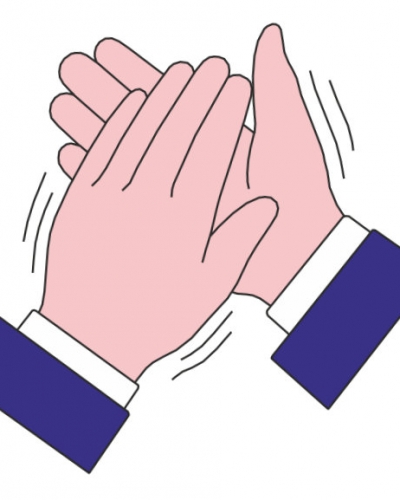
👉When we rub our hands , we transformed the chemical energy in our muscles into kinetic energy, and after, the kinetic energy can be transformed into thermal energy.
👉The chemical energy in the fireworks is converted into light, heat , sound and mechanical energy when it explode.
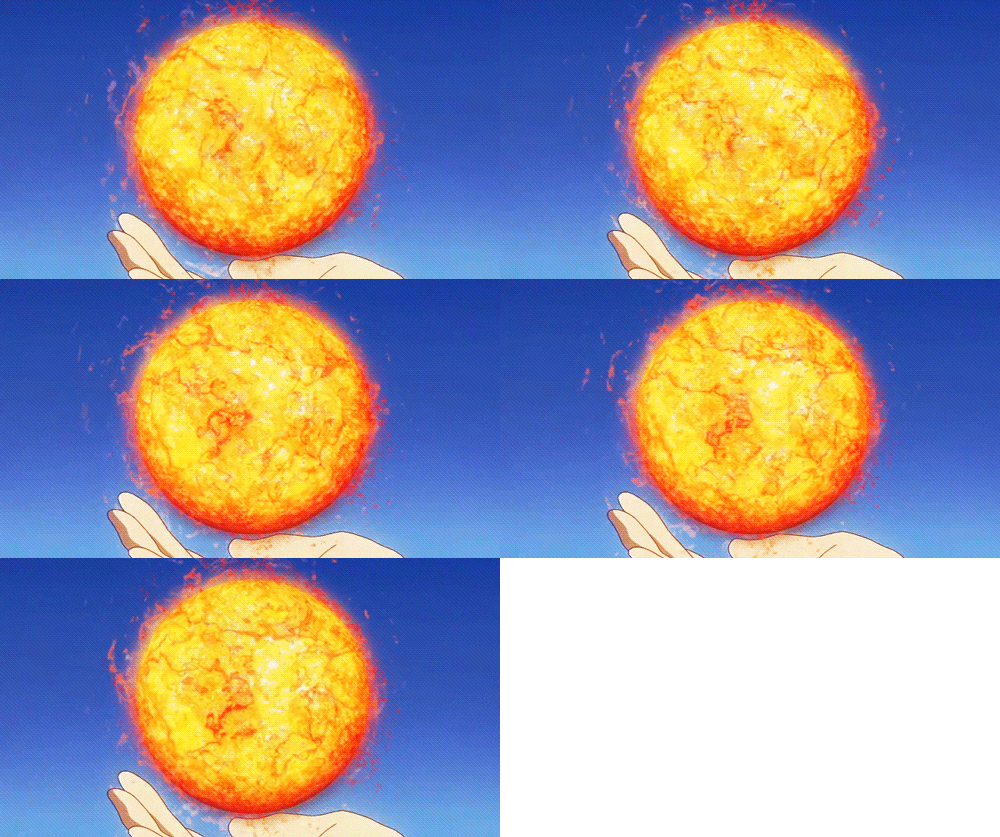
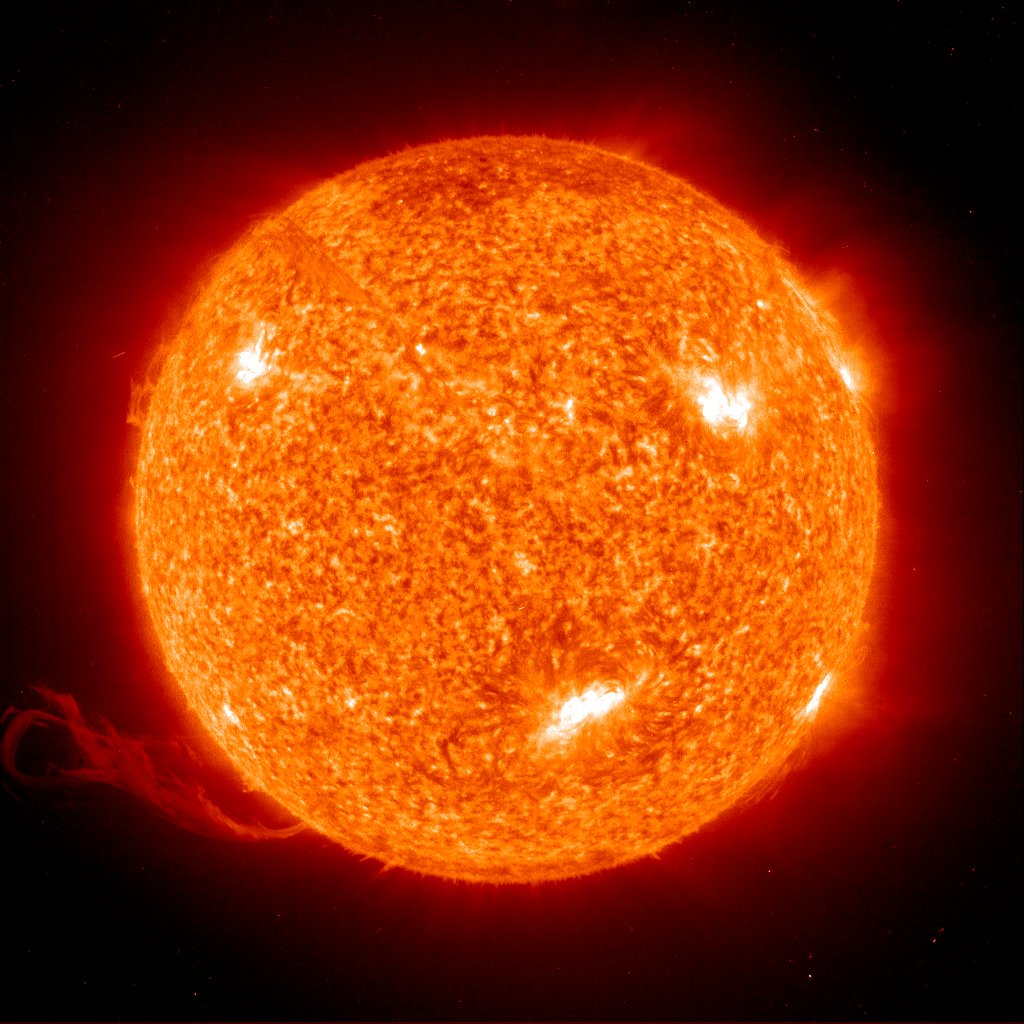
👉The nuclear energy in stars is transformed into very intense luminous and thermal energy.
sábado, 28 de enero de 2017



martes, 24 de enero de 2017
What is Energy?
Energy is the capacity of a body to perform transformations and do work. It can't be destroyed or created, it only can be transformed. Humans take their energy from food, and after we transform this energy into metabolic and muscular energy. Modern devices need electrical energy, for example; cars have motors that use gasoline or diésel as a source of energy.


➡ FORMS OF ENERGY.
In nature, these forms of energy can manifest in different ways:
POTENTIAL: Associated with the height of an object above the ground, or the storage of energy in a spring.
KINETIC: The energy of physical movement.
MECHANICAL: The sum of potential and kinetic energy.
SOUND: The energy of sound waves , which are prodced by vibrations and propagated hrough a physical médium.
 ELECTRICAL: The product of an electrical current.
NUCLEAR: tThe energy in the nucleus of an atom.
LUMINOUS: Associated with light.
THERMAL OR CALORIFIC: Associated with the movment of particles in matter.
CHEMICAL: Results from the formation or descomposition of substances. For example, metabolic energy is generated by living organisms that perform chemical transformations during digestión and respiration.
ELECTROMAGNETIC: Occurs when electrical currents créate magnetic fields.
➡ UNITS OF MEASUREMENT FOR ENERGY.
Energy is measured in joules (J) , and when it takes the form of heat, we express it as calories. Relationship: 1 cal= 4.18 J.
➡ POWER.
Power is the amount of work that it can do a machine in a certain amount of time. Relationship: P=W/t. (W: work expressed in joules and t: time expressed in seconds)
In machines, the output is always less tan their energy input. This happens because some energy is always lost to friction, vibration and heat. Relationship:
Energy conversión efficiency (%)= output/input * 100
➡ FORMS OF ENERGY.
In nature, these forms of energy can manifest in different ways:
POTENTIAL: Associated with the height of an object above the ground, or the storage of energy in a spring.
KINETIC: The energy of physical movement.
MECHANICAL: The sum of potential and kinetic energy.
SOUND: The energy of sound waves , which are prodced by vibrations and propagated hrough a physical médium.
 ELECTRICAL: The product of an electrical current.
NUCLEAR: tThe energy in the nucleus of an atom.
LUMINOUS: Associated with light.
THERMAL OR CALORIFIC: Associated with the movment of particles in matter.
CHEMICAL: Results from the formation or descomposition of substances. For example, metabolic energy is generated by living organisms that perform chemical transformations during digestión and respiration.
ELECTROMAGNETIC: Occurs when electrical currents créate magnetic fields.
➡ UNITS OF MEASUREMENT FOR ENERGY.
Energy is measured in joules (J) , and when it takes the form of heat, we express it as calories. Relationship: 1 cal= 4.18 J.
➡ POWER.
Power is the amount of work that it can do a machine in a certain amount of time. Relationship: P=W/t. (W: work expressed in joules and t: time expressed in seconds)
In machines, the output is always less tan their energy input. This happens because some energy is always lost to friction, vibration and heat. Relationship:
Energy conversión efficiency (%)= output/input * 100
Energy
We will learn a new unit called Energy. Before we begin, I'm going to solve the next answers:
1.What is the difference between a form of energy and an energy source?

2.Can you name an energy source?
The sun, the uranium...

3.What is a renewable energy source?
 Renewable enegy sources come from natural resources that we cannot use up completely. These include hydroelectric, solar, marine, geotermal and biomass resources, as well as energy that we can produce from solid urban waste.
4. Where do oil, gas and coal come from?
They come from fossil fuels, include in non-renewable energy sources.
5. What types of power stations do you know?
Thermal power stations that use fossil fuels, combined-cycle power stations, nuclear power stations, wind farms, hydroelectric power stations, solar power stations, biomass power stations, marine power stations and geothermal power stations.


6. How is electricity transported from a power station to your home?
First they have to raises the voltaje and then routing for high voltage and the lines are installed on towers. Before this procces, the substanctions use transformers to reduce the power to lower voltages. Finally, the power is distributed to homes.


7. What do the terms "greenhouse effect" and "acid rain" mean? How are they related to energy production?

 Acid rain is caused by emissions of sulfur dioxide and nitrogen oxide, which react with the water molecules in the atmosphere to produce acids. Acid rain is a rain or any other form of precipitation that is unusually acidic, meaning that it possesses elevated levels of hydrogen ions.
The greenhouse effect is the process by which radiation from a planet's atmosphere warms the planet's surface to a temperature above what it would be without its atmosphere.
8. What other points could you add to your poster or leaflet?
Environmental consequences.
8. What other points could you add to your poster or leaflet?
Environmental consequences.
sábado, 26 de noviembre de 2016
Mechanisms that control motion
⇨ DIRECTION CONTROL : RATCHETS
 A ratchet is a mechanism that controls the direction of motion. Only allows motion in one direction.
Some ratchets are reversible, they can turn to both directions. We find them in watches, cable-tensors and elevator brake systems.
⇨ SPEED REDUCTION : BRAKES
Brakes use friction to reduce speed, and they are activated by levers. The levers transmit force to an output receptor, which puts pressure on the wheel. This produces friction, that slows down the wheel.
There are 3 types:
♦ Disc brakes: It is connected to an axle. The disc has pressure thaks to the brake pads.
♦ Band brakes: A drum is connceted by an axle. A fexible band puts pressure on the outside of the drum. We use them in carriages and they depended on the strength of the driver.
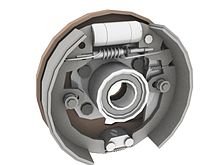
♦ Drum brakes: A pair of brake shoes apply pressure to the inside of the drum.
 A ratchet is a mechanism that controls the direction of motion. Only allows motion in one direction.
Some ratchets are reversible, they can turn to both directions. We find them in watches, cable-tensors and elevator brake systems.
⇨ SPEED REDUCTION : BRAKES
Brakes use friction to reduce speed, and they are activated by levers. The levers transmit force to an output receptor, which puts pressure on the wheel. This produces friction, that slows down the wheel.
There are 3 types:
♦ Disc brakes: It is connected to an axle. The disc has pressure thaks to the brake pads.
♦ Band brakes: A drum is connceted by an axle. A fexible band puts pressure on the outside of the drum. We use them in carriages and they depended on the strength of the driver.
♦ Drum brakes: A pair of brake shoes apply pressure to the inside of the drum.
 |
| DRUM BAKE |
 |
| BAND BRAKE |
Transformation of motion
Some mechanisms convert linear motion into rotary motion, but the most are reversible. They also transform rotary motion into linear motion.
The linear motion can be undirectional or reciprocating, that alternate from one side to the other.
⇨ ROTARY-LINEAR TRANSFORMATION
➜ Wheel
Wheels are important parts of bicycles and they let us move more easily because they reduce our contact with the ground and decrease friction, but if there isn't enough friction, the wheels can slide out of control.
A wheel moves forward a distance that is equal to its circumference, so we need less force with larger wheels and they move more quickly.


➔ Rack and pinion mechanism
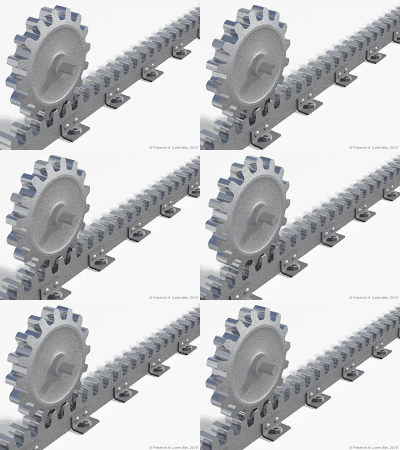
This mechanism transforms rotary motion into linear motion as a wheel an it has two parts. The rack is a bar with many teeth and the pinion is a gear with teeth that interlock with the rack. The pinion rotates and the rack moves in linear direction. It can be reversible. We use them for sliding dors, conveyor belts...

➔ Nut and bolt mechanisms
As a rack and pinion, this mechanism has two parts: a bolt or shaft with a spiral groove and a nut that turns around it. We can turn and tighten the nut or the bolt in order to holds things together. We can use this mechanism to lift loads because it acts as a reducing system. Ex: scissors jacks, water tap mechanisms, screw-top bottles...


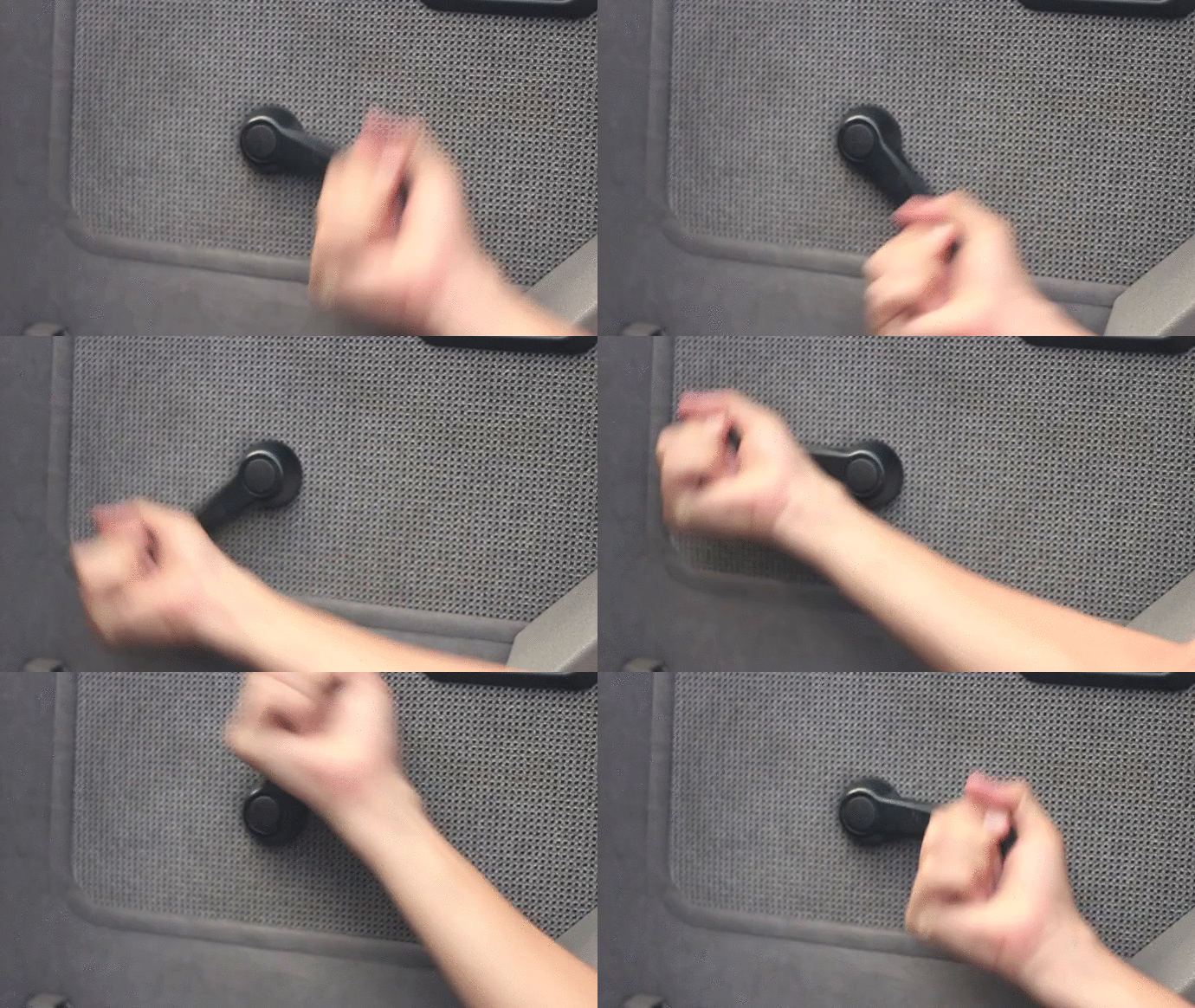
➔ Winch and crank mechanism
A winch is a cylinder that rotates around a horizontal axis. We attach a rope to the winch and to a load, and we turn the crank to rotate the winch. The rope rolls up and lifts the load. The crank increases the force and the winch transforms rotary motion into linear motion. This is proportional to the ratio between the radious of the crank and the radius of the winch.
We find this mechanism in construction cranes and in the mechanism that raises window blinds in our homes.


⇨ RECIPROCATING ROTARY-LINEAR TRANSFORMATION
 The pedal of a bicycle transforms the reciprocating movement of our legs into continuous. Some mechanisms work in the opposite way.
➜ Crank and rod mechanism
This mechanism was important for the fist steam engines. Today we find cranks and rods in internal combustion engines, as well as windscreen wiper mechanisms.


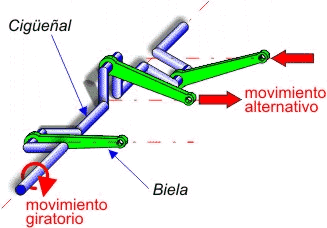
➔ Crankshaft mechanism
A crankshaft mechanism is formed by multiple rods connected to one shaft. The rods are connected to cranks and the cranks are connected to the crankshaft.
This mechanism can synchronise the movements of various parts. We use them for sewing machines.


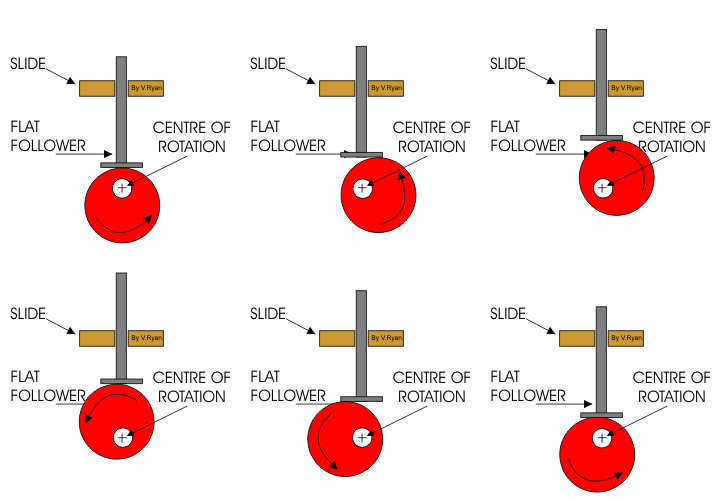
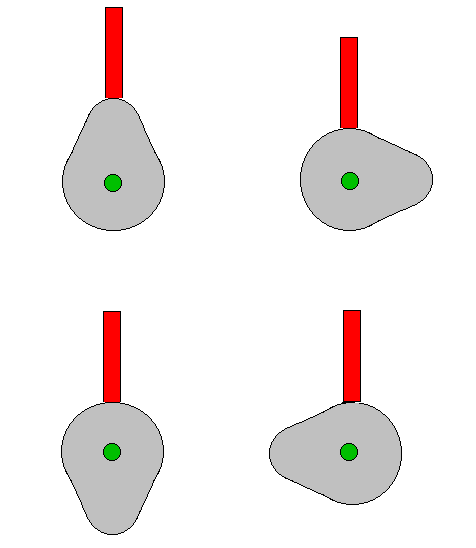
➔ Cam mechanism
A cam is an irregularly shaped device that rotates on a shaft. When the cam rotates, it pushes a bar called follower, that can move other parts and it can turn a switch on and off.
If we put multiple cams on one shaft, form other mechanism called camshaft, that makes the same function of a crankshaft. We can find them in toys, automatic tools and combustion motors.
Some cams are circular, but with an axis of rotation that is off-centre. These are called eccentric cams because they rotate in an irregular way. We can find them in sewing machines.


The linear motion can be undirectional or reciprocating, that alternate from one side to the other.
⇨ ROTARY-LINEAR TRANSFORMATION
➜ Wheel
Wheels are important parts of bicycles and they let us move more easily because they reduce our contact with the ground and decrease friction, but if there isn't enough friction, the wheels can slide out of control.
A wheel moves forward a distance that is equal to its circumference, so we need less force with larger wheels and they move more quickly.
➔ Rack and pinion mechanism
This mechanism transforms rotary motion into linear motion as a wheel an it has two parts. The rack is a bar with many teeth and the pinion is a gear with teeth that interlock with the rack. The pinion rotates and the rack moves in linear direction. It can be reversible. We use them for sliding dors, conveyor belts...
➔ Nut and bolt mechanisms
As a rack and pinion, this mechanism has two parts: a bolt or shaft with a spiral groove and a nut that turns around it. We can turn and tighten the nut or the bolt in order to holds things together. We can use this mechanism to lift loads because it acts as a reducing system. Ex: scissors jacks, water tap mechanisms, screw-top bottles...
➔ Winch and crank mechanism
A winch is a cylinder that rotates around a horizontal axis. We attach a rope to the winch and to a load, and we turn the crank to rotate the winch. The rope rolls up and lifts the load. The crank increases the force and the winch transforms rotary motion into linear motion. This is proportional to the ratio between the radious of the crank and the radius of the winch.
We find this mechanism in construction cranes and in the mechanism that raises window blinds in our homes.
⇨ RECIPROCATING ROTARY-LINEAR TRANSFORMATION
The pedal of a bicycle transforms the reciprocating movement of our legs into continuous. Some mechanisms work in the opposite way.➜ Crank and rod mechanism
This mechanism was important for the fist steam engines. Today we find cranks and rods in internal combustion engines, as well as windscreen wiper mechanisms.
➔ Crankshaft mechanism
A crankshaft mechanism is formed by multiple rods connected to one shaft. The rods are connected to cranks and the cranks are connected to the crankshaft.
This mechanism can synchronise the movements of various parts. We use them for sewing machines.
➔ Cam mechanism
A cam is an irregularly shaped device that rotates on a shaft. When the cam rotates, it pushes a bar called follower, that can move other parts and it can turn a switch on and off.
If we put multiple cams on one shaft, form other mechanism called camshaft, that makes the same function of a crankshaft. We can find them in toys, automatic tools and combustion motors.

Some cams are circular, but with an axis of rotation that is off-centre. These are called eccentric cams because they rotate in an irregular way. We can find them in sewing machines.

jueves, 24 de noviembre de 2016
Rotary transmission
Rotary transmission systems put two rotating elements into contact. These mehanisms have two purposes:
⇸Transferring rotary force from an input location to another location.
⇸Changing the rotary speed by using rotating elements of different sizes.


These mechanisms keep the same speed ratios, but each one offers a different advantage.
⟶ CHANGES IN SPEED
♦ To increase the speed of a rotary system, we must transmit motion from a larger element to a smaller element, but when we increase the speed we also decrease the rotary force, or torque.
♦ If we want to decrease the speed of a rotary system, we must transmit motion from the smaller element to a large elemnet, and at the same time, we increase the torque.
♦ If both elements are the same size, the torque remains constant, and the rotary force will also remain constant.


⟶ SPEED RATIOS
When we have an increasing speed system, the smaller wheel rotates more quickly than the larger. This differnce in speed depends on the size of the elements. If the smaller wheel is five times smaller, it rotates five times faster. This happens because the smaller have to cover the same linear distance as the big wheel does in one rotation.
This relationship called the ratio of transmission, is inversely proportional to their sizes.
The operation is N square divided by n = d divided by D square.

 If we want to calculate the size ratio of wheels or pulleys, we compare their diametres, radius or circumference. In the case of gears, we compare the numbers of teeth (Z) that each gear has.
⟶ BELT DRIVES AND GEAR TRAINS
A belt drive is a system of pulleys connected by belts and each belt connects a pair of pulleys, so they turn together.
To calculate the ratio of transmission between the fist element and the last element, we must multiply the ratios of transmission of the first pair of wheels and the second pair.
The operation is N to the power of four divide by N = D multiplying by D cube divided by D square multiplying by D to the power of four.


⟶ CHANGES IN DIRECTION AND ROTATION
We can use various systems to change the direction of rotation or the axis of rotation a belt drive. We can also vary the distance between the wheels.
Gear drives require special parts to make these changes. We use diffrent types of gears when two axes are parallel, perpendicular or crossed.


In some gear mechanisms, several cogs or teeth intelock at the same time. These mechanisms are more precise and they transmit more rotary force , or torque.
⟶ WORM DRIVE
A worm drive reduces the speed of a rotary system very effectively and it has two parts; a worm shaft and a worm gear. We use them for tuning the strings of a guitar, for elevator mechanisms and for speed reducing systems. Each shaft has two, three or even more grooves, and each one interlocks with one tooth.
When the worm shaft makes one rotation, the worm gear moves forward one tooth for every groove on the shaft.


⇸Transferring rotary force from an input location to another location.
⇸Changing the rotary speed by using rotating elements of different sizes.

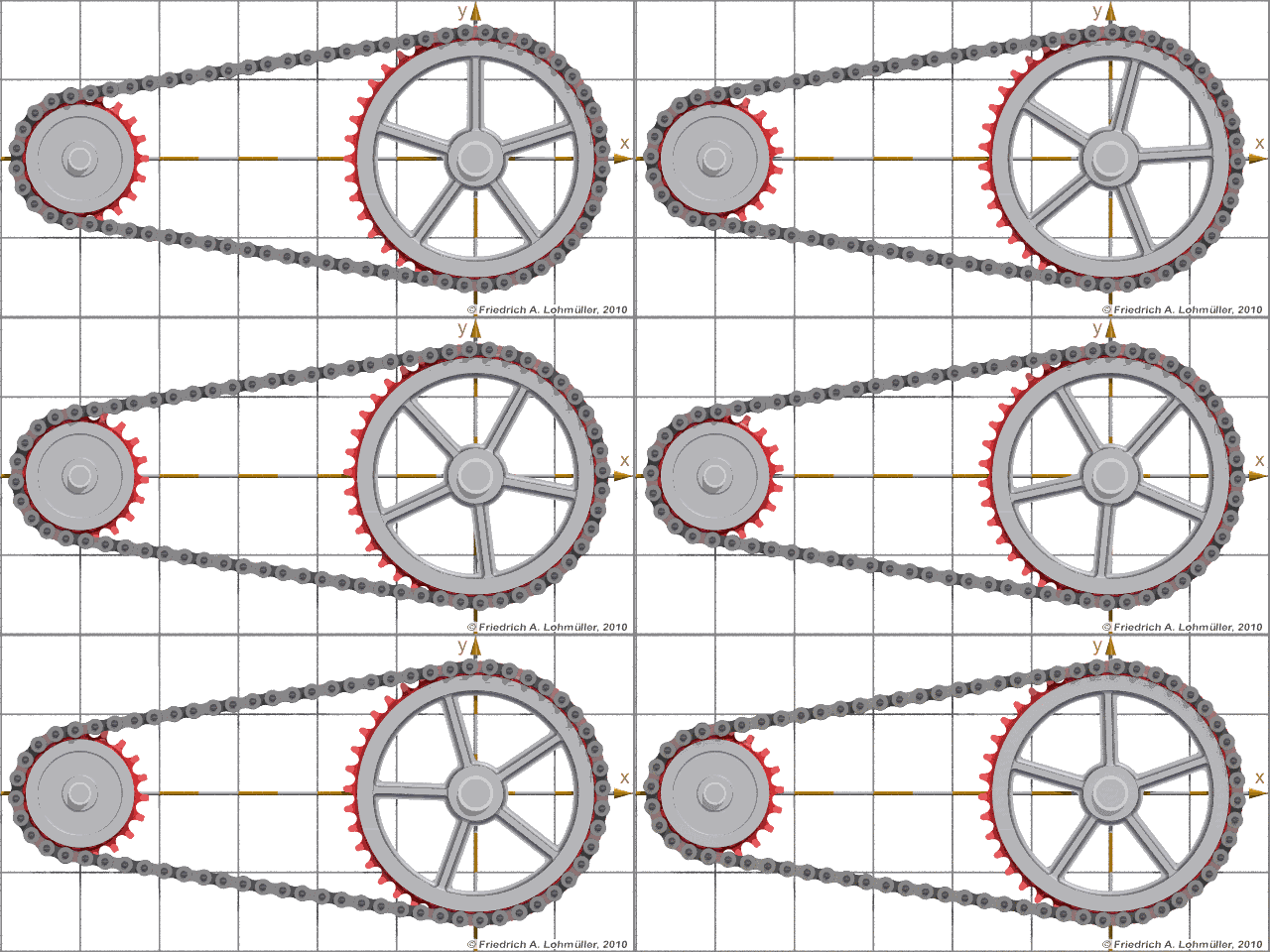
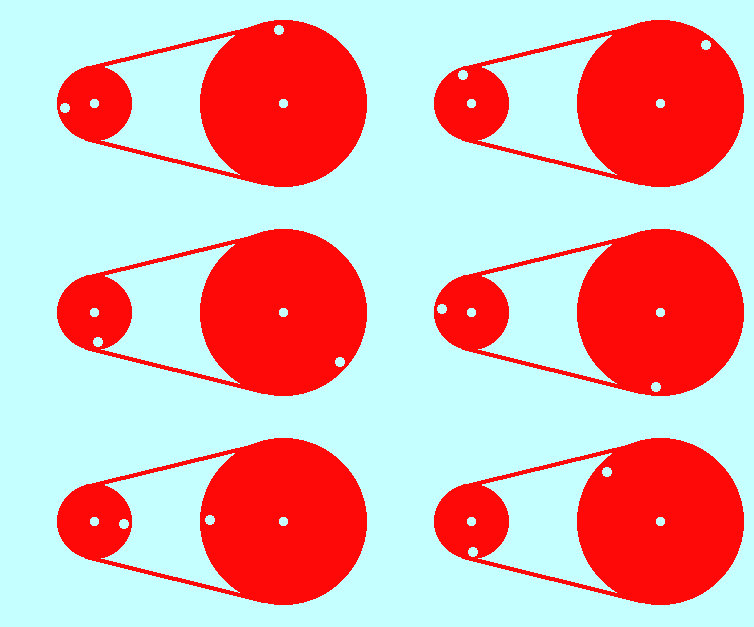
These mechanisms keep the same speed ratios, but each one offers a different advantage.
⟶ CHANGES IN SPEED
♦ To increase the speed of a rotary system, we must transmit motion from a larger element to a smaller element, but when we increase the speed we also decrease the rotary force, or torque.
♦ If we want to decrease the speed of a rotary system, we must transmit motion from the smaller element to a large elemnet, and at the same time, we increase the torque.
♦ If both elements are the same size, the torque remains constant, and the rotary force will also remain constant.
⟶ SPEED RATIOS
When we have an increasing speed system, the smaller wheel rotates more quickly than the larger. This differnce in speed depends on the size of the elements. If the smaller wheel is five times smaller, it rotates five times faster. This happens because the smaller have to cover the same linear distance as the big wheel does in one rotation.
This relationship called the ratio of transmission, is inversely proportional to their sizes.
The operation is N square divided by n = d divided by D square.
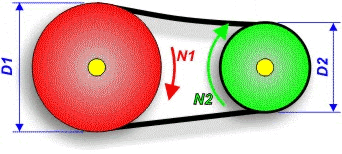
 If we want to calculate the size ratio of wheels or pulleys, we compare their diametres, radius or circumference. In the case of gears, we compare the numbers of teeth (Z) that each gear has.
⟶ BELT DRIVES AND GEAR TRAINS
A belt drive is a system of pulleys connected by belts and each belt connects a pair of pulleys, so they turn together.
To calculate the ratio of transmission between the fist element and the last element, we must multiply the ratios of transmission of the first pair of wheels and the second pair.
The operation is N to the power of four divide by N = D multiplying by D cube divided by D square multiplying by D to the power of four.


⟶ CHANGES IN DIRECTION AND ROTATION
We can use various systems to change the direction of rotation or the axis of rotation a belt drive. We can also vary the distance between the wheels.
Gear drives require special parts to make these changes. We use diffrent types of gears when two axes are parallel, perpendicular or crossed.

In some gear mechanisms, several cogs or teeth intelock at the same time. These mechanisms are more precise and they transmit more rotary force , or torque.
⟶ WORM DRIVE
A worm drive reduces the speed of a rotary system very effectively and it has two parts; a worm shaft and a worm gear. We use them for tuning the strings of a guitar, for elevator mechanisms and for speed reducing systems. Each shaft has two, three or even more grooves, and each one interlocks with one tooth.
When the worm shaft makes one rotation, the worm gear moves forward one tooth for every groove on the shaft.

Suscribirse a:
Entradas (Atom)